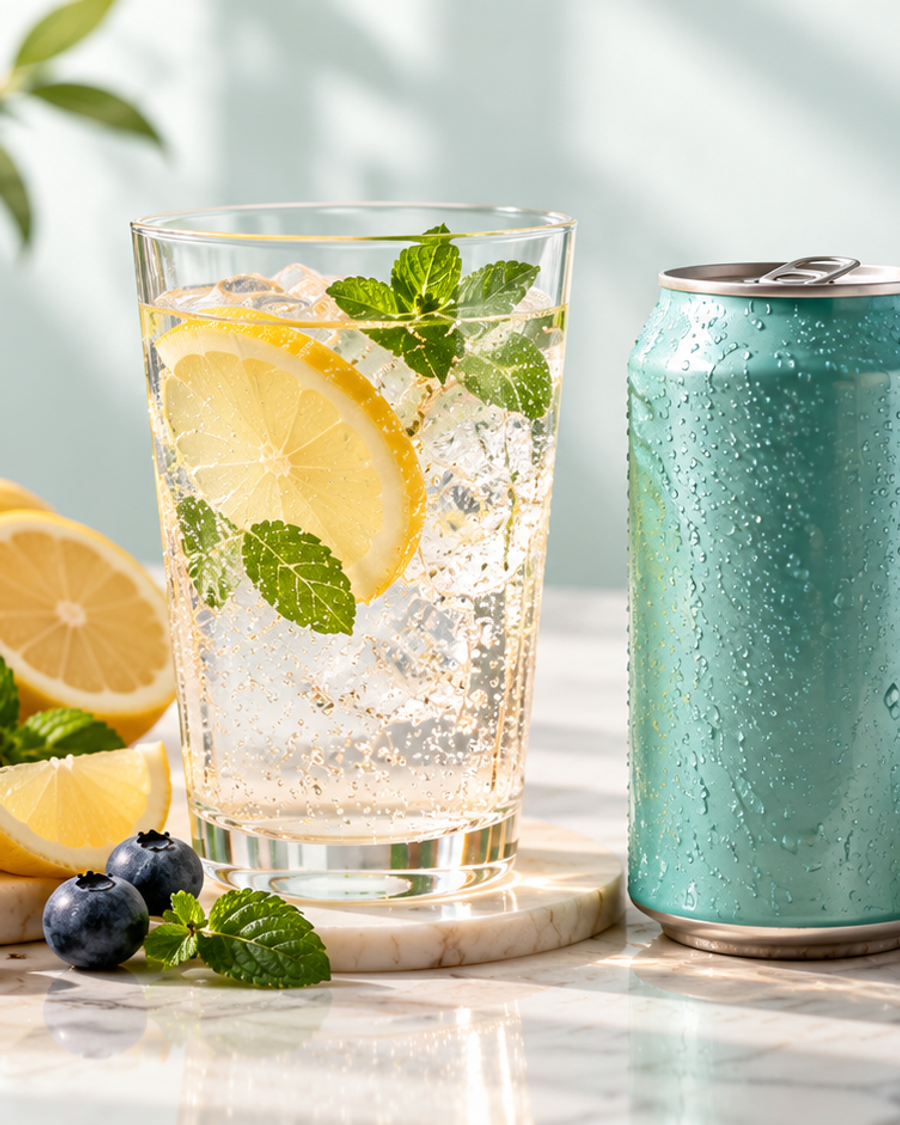
Sandra kept seeing it on TikTok. A pastel can and a caption promising a happy gut in every sip. At forty-four, she was working hard on her weight and her health. Swapping soda for something “gut-friendly” felt like an easy win. She liked the idea of a soda that did something for her. By Saturday, a 12-pack sat in her fridge.
Marcus found it while hunting for his usual cola. He drank two a day, more at summer cookouts. He held up a can and squinted. “So soda is good for you now?”
Sandra had her answer ready. It had fiber and less sugar. Everyone online said it helped digestion. She drank one at lunch and another that afternoon.
By evening, her jeans felt tight and her stomach felt full of air. Was the drink working, or was something wrong? She did not want to give up on it. But she did not want another evening like this one either.
Marcus had his own question. If he swapped his daily cola for one of these, would his gut benefit? Or was he paying more for a prettier can?
Does science support the claims, or is marketing getting ahead of the evidence?
In this post we will cover:
- What prebiotic soda is, and what it is not
- What research says about prebiotic fiber and dose
- Why some people bloat and others feel fine
- How it compares with regular soda and plain water
- How to read the label without the hype
What Is Prebiotic Soda and How Does It Work?
Prebiotic soda is a fizzy drink made with a prebiotic ingredient, usually a type of dietary fiber. Common choices are inulin, chicory root fiber, and fructooligosaccharides (FOS). These fibers pass through your stomach and small intestine without being fully digested. In the colon, certain gut microbes use them as food.
These colorful drinks are marketed as a modern swap for traditional soft drinks. Many promise added fiber, less sugar, and gut support.
Prebiotics and probiotics are not the same. Experts at the International Scientific Association for Probiotics and Prebiotics (ISAPP) explain the difference. A prebiotic is something certain gut microbes pick out to use as food, in a way that helps your health. A probiotic is a live microbe that helps your health when you take enough of it [14, 15]. So a “prebiotic” drink does not necessarily contain live helpful bacteria.

Added fiber does not make a drink a probiotic. A fermented drink is not automatically proven to improve gut health.

Can Prebiotic Soda Actually Improve Your Gut Health?
Possibly, but “improve gut health” needs a precise meaning. Some prebiotic fibers can raise certain helpful bacteria and support bowel function. However, research on a fiber or supplement does not prove that every prebiotic soda delivers the same benefit. The fiber type, the amount, and the person drinking it all matter.
Your gut microbiome is the community of microbes in your digestive tract. Diet, medications, age, environment, and more shape it.
When gut bacteria ferment some fibers, they can make short-chain fatty acids and other byproducts. Short-chain fatty acids are small compounds your gut cells can use. Research on inulin-type fructans has found changes in certain bacteria, including Bifidobacterium. Results depend on the fiber, dose, population, and outcome measured [1].
One review of chicory-derived inulin-type fructans found that 3 to 20 grams per day increased Bifidobacterium across studies. Some bowel-function outcomes also improved in healthy people [2]. But keep three distinctions in mind:
- A shift in bacteria is not a proven improvement in symptoms.
- The dose matters. A drink may hold less fiber than the studies used.
- The whole product matters. Fiber is only one part of a drink’s nutrition profile.
How Much Prebiotic Fiber Does Your Gut Actually Need?
It depends on your goal. A few grams of fiber may nudge gut bacteria. But more regular bowel movements were seen mainly at doses above 10 grams a day. Inulin-type fiber on its own did not help people go more often.
In one small trial, adults who ate little fiber had snack bars with chicory inulin. At 7 grams a day, Bifidobacterium clearly rose. At 3 grams a day, a small rise showed up on qPCR, a targeted lab test that counts bacterial DNA. But it did not hold up in the broader microbiome analysis. Neither dose changed digestive symptoms [11].
For bowel habits, a large review looked at fiber supplements for chronic constipation. More regular bowel movements showed up mainly at doses above 10 grams a day. Psyllium was the most effective type studied. Inulin-type fiber on its own did not increase how often people went. It modestly softened stools and increased gas [12].
Why Does Prebiotic Soda Cause Bloating and Gas?
The same fermentation that makes some fibers useful can also cause discomfort. Gut bacteria make gas as they ferment fiber. For some people, this means bloating, belly pressure, flatulence, or changes in bowel habits. People with IBS or sensitivity to fermentable carbohydrates may tolerate inulin and related fructans poorly.
The best evidence comes from a review of 11 trials in 729 adults with IBS and other functional bowel disorders. Prebiotics raised bifidobacteria. But they worked no better than placebo for overall relief, belly pain, bloating, gas, or quality of life. Effects differed by fiber type and dose, and inulin-type fructans made gas worse [3].
So why does the same can affect people so differently? In IBS, symptoms after inulin or fructose seem to come from a gut that is extra sensitive to gas. This is called visceral hypersensitivity. The gut is not making more gas than usual. It reacts more strongly to normal stretching [13].
Current data do not support prebiotics as a treatment for IBS [3].
If you have a sensitive stomach:
- Start small. Avoid suddenly adding a large amount of extra fiber.
- Notice your symptoms. If bloating, pain, diarrhea, or other discomfort keeps happening, stop and reassess.
- Do not force it. You do not need prebiotic soda to support your gut health.
Is Prebiotic Soda Actually Healthier Than Regular Soda?
It can be the better choice, especially if it helps you cut added sugar. But there is no universal winner until you compare labels. Regular soda generally provides added sugar and calories with little fiber. Some prebiotic sodas have less sugar and a few grams of fiber. Others use different sweeteners, serving sizes, or ingredients that do not suit everyone.
What about artificial or non-nutritive sweeteners? Evidence on their effects on the human gut microbiome is mixed [5–8]. Findings vary by sweetener, dose, and study design. They do not all damage the gut, but they are not all free of effects either.
So judge the actual formula. “Sugar-free” or “naturally sweetened” is not a complete health assessment. Still, a lower-sugar prebiotic soda may be a useful step away from regular soda.
Can Prebiotic Soda Replace Fiber From Whole Foods?
No, not as a general strategy, though it can add some fiber. But beans, lentils, vegetables, fruit, whole grains, nuts, and seeds offer many fiber types. They also bring vitamins, minerals, and other helpful compounds, plus the variety one added fiber cannot.
Think of it as an optional extra, never your main fiber source. Daily habits that support your gut:
- Eat a variety of vegetables and fruits.
- Include beans, lentils, and other legumes regularly, as tolerated.
- Choose whole grains when appropriate.
- Increase fiber gradually if your intake is low.
- Drink fluids regularly to support normal bowel function.
- Notice which foods trigger symptoms for you.
Does Prebiotic Soda Count Toward Your Daily Hydration?
Yes. A water-based prebiotic soda adds fluid to your day, like most drinks. But hydration and gut health are separate questions. Added fiber gives the drink no special hydration advantage over plain water. Do not confuse a gut-health claim with a hydration claim.
For everyday hydration, plain water remains a practical first choice. It has no added sugar, and you do not pay for functional ingredients you may not need. If you love fizz, unsweetened sparkling water works too.
For more on daily habits, read Why Plain Water Is Still the Best Thing You Can Drink.
How to Choose a Prebiotic Soda Without the Hype
You do not need to avoid every trendy drink. Just judge the claims wisely. Skip the front of the can and read the nutrition panel and ingredient list. Then notice how your body responds, and ask whether the promises outrun the evidence.


Be cautious of promises to “heal your gut,” “reset your microbiome,” or fix digestive problems. A drink with prebiotic fiber is not a proven treatment for a digestive condition. If it costs too much, causes symptoms, or tastes wrong to you, skip it.
A simple decision guide:
- You enjoy soda and want less added sugar: A lower-sugar option may be worth comparing.
- You want more fiber: Start with food. Then check whether the drink adds a meaningful amount.
- You expect it to treat a gut condition: Do not rely on it. Discuss ongoing symptoms with your healthcare professional.
The Bottom Line
Prebiotic soda sits where two reasonable goals meet: less added sugar and more fiber. The science on certain fibers is real, but the details matter.
Sandra’s bloating was not proof the drink was “working.” It was her gut telling her something. Marcus may find a lower-sugar can a fair swap for his cola, if he reads the label first. Neither needs it for a healthy gut. A varied, fiber-rich diet, regular fluids, and attention to your own digestion matter more.
Informed choices beat impressive packaging. Know what is in the can, and choose what works for you.
Your turn: Have you tried prebiotic soda? Did it sit well, or leave you bloated like Sandra? Tell me in the comments.