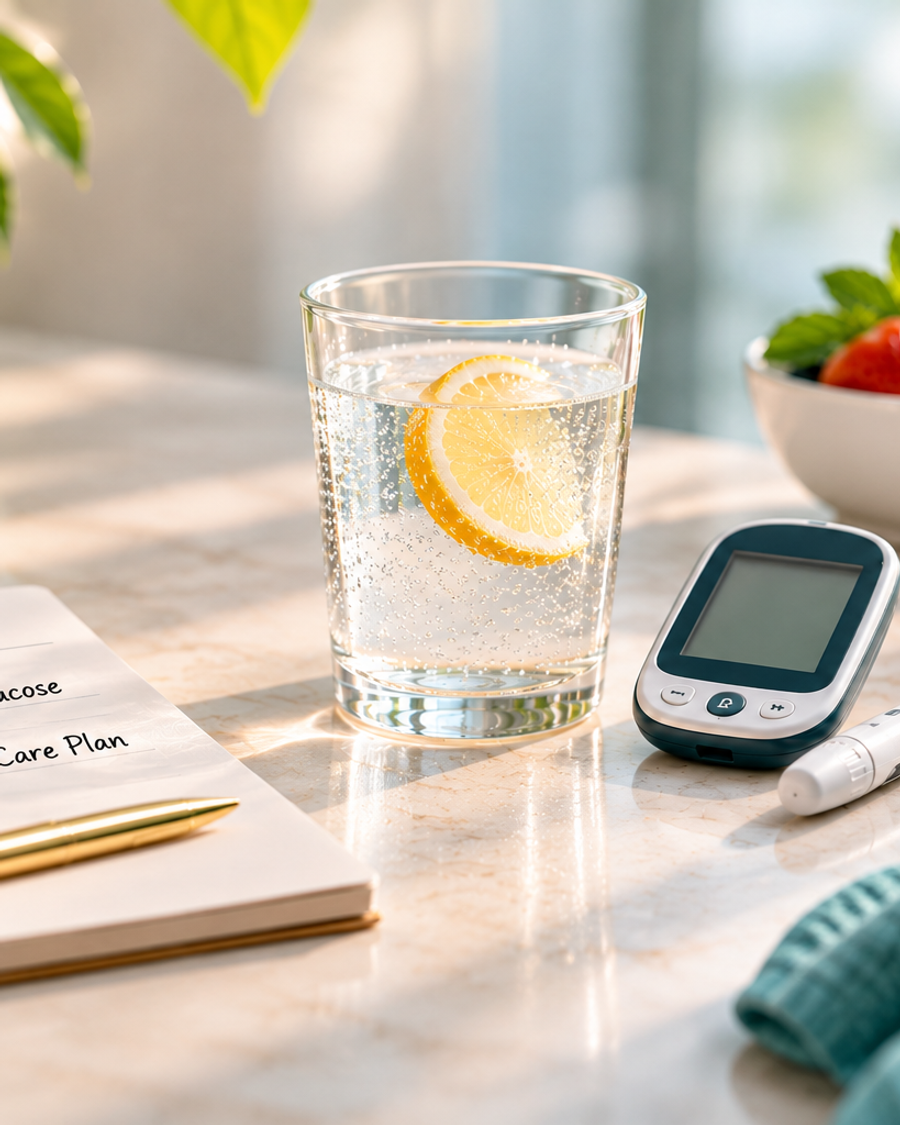
Maya has had a hot week. She has been drinking very little water. Now she feels thirsty and tired. When she checks her blood sugar, the number is higher than she expected.
Daniel has a high reading of his own. He has heard that water is “good for blood sugar.” He wonders if a few extra glasses could bring his number back down.
Their stories point to one important difference. Staying hydrated matters. But staying hydrated is not the same as treating high blood sugar.
Maya and Daniel are fictional characters. They were created to show the experiences that many people have with blood sugar and hydration.
In this post we will cover:
- Whether drinking water lowers blood sugar
- How dehydration and high blood sugar affect each other
- What the research says about water and glucose
- Why swapping sugary drinks for water may help
- What to do when your blood sugar is high
- Warning signs that need urgent medical care
Does Drinking Water Actually Lower Blood Sugar?
Drinking water can help prevent or fix dehydration. Dehydration can make blood sugar harder to manage. But water is not a reliable way to bring high blood sugar down. It should never replace your prescribed medicine, glucose checks, or advice from your healthcare professional.

How Does Dehydration Affect Your Blood Sugar Levels?
Losing more fluid than you take in can affect blood sugar control. In one small study, men with type 2 diabetes drank little water for three days. Their glucose was higher on a lab sugar test afterward. The stress hormone cortisol seemed to play a role. But the study was too small to prove that extra water lowers glucose.
In this study, nine men with type 2 diabetes each took a glucose-tolerance test twice. This test measures how well your body handles sugar. They took it once while normally hydrated. They took it again after three days of low water intake.
Those three days cost them about 1.6% of their body weight. Their glucose was higher after the low-water days. The effect seemed to involve cortisol, a hormone your body releases under stress.
This study is helpful. But it was small. It cannot show that drinking extra water will lower glucose for everyone.
Can High Blood Sugar Make You Feel Thirsty?
Yes. Dehydration can be a result of high blood sugar, not just a cause. When glucose runs high, your body loses extra fluid through frequent urination. This can leave you thirsty and tired. So thirst is not always a sign that you simply need more water.
Frequent urination, strong thirst, weight loss, and dehydration can be signs of high glucose. With vomiting or confusion, they can signal a crisis.
What does this mean for Maya? Getting back to her usual water routine may make sense. But her thirst and tiredness could be caused by her high glucose, not by the hot week.
Drinking more water will not tell Maya what caused her higher reading. It will not tell her what treatment she needs. She should recheck her glucose and follow her care plan.
What Does Research Say About Water and Glucose?
The research is limited and mixed. A 2024 systematic review looked at randomized trials that changed how much water people drank each day. A systematic review gathers and studies all the trials on one question. It found 18 trials, but only two measured fasting blood glucose, your blood sugar before eating.
Water Before Meals
The first trial included 40 adults. Each had been diagnosed with type 2 diabetes within the past five years. For 8 weeks, they drank about 1 liter of water a day.
They split the water across their three meals and drank it before each one. Their fasting glucose fell more than in a group given no water advice.
But there is a catch. The water group also lost weight. So the benefit may have come from eating less at meals, not from the water itself.
Water at Waking and Bedtime
The second trial included adults with normal or near-normal fasting glucose. It tested water at waking and at bedtime, not before meals. It found no effect on fasting glucose.
A Small Pilot Study From Sweden
This study gave 31 healthy adults an extra 1.5 liters of water a day for six weeks. These adults drank little water and had blood and urine tests showing signs of under-hydration.
Their fasting glucose fell only slightly, by about 0.2 mmol/L (roughly 4 mg/dL). The study also had no comparison group.
These results are interesting. But they are not enough to recommend extra water as a treatment to lower glucose.
So what should Daniel take away? Not “drink a lot of water when my glucose is high.” Instead: “drink enough to avoid dehydration, and follow my diabetes care plan for high readings.”
Is Water Better Than Sugary Drinks for Blood Sugar?
Choosing water instead of a sugary drink cuts the sugar and calories you get from beverages. This is different from water directly lowering blood glucose. The benefit comes from what water replaces. In a study of more than 80,000 women, this swap was linked to a modestly lower type 2 diabetes risk.
In that study, drinking plain water on its own was not linked to diabetes risk. But replacing one daily sugary drink or fruit juice with a cup of water was linked to lower risk.
Say Daniel usually has a sweetened drink with lunch. Choosing water instead may cut the added sugar he takes in. But that does not mean he can use water to fix a high reading. It also does not mean he can change his medication plan.
Does Drinking More Water Prevent Type 2 Diabetes?
We do not know for sure. Most research on water and type 2 diabetes risk is observational. That means researchers tracked what people did without assigning them to drink more water. These studies can find links between habits and health. But they cannot prove that drinking more water prevents diabetes.
A review combined six observational studies. People who drank more water had a slightly lower risk of type 2 diabetes, about 6% lower. But studies like these can only show a link, not cause and effect.
And the results do not all agree. A large Swedish study found no clear link between plain water intake and later diabetes.
What Should You Do When Blood Sugar Is High?
If you have diabetes and your reading is above your target, follow the plan from your healthcare professional. Your plan may include rechecking your glucose, taking prescribed medicine as directed, checking ketones, and contacting your care team. Drink water if you are thirsty and can safely keep fluids down. But do not use water instead of treatment.

When Should You Check Your Ketones?
Ketones are substances your body makes when it breaks down fat for energy. Too many can lead to diabetic ketoacidosis, or DKA. DKA is a serious buildup of ketones in the blood.
Check your ketones if you use insulin or have been told you are at risk of DKA. Check them when you have symptoms or are sick. Also check if you have missed insulin doses or have other triggers.
This matters most when your glucose is above 200 mg/dL (11.1 mmol/L).
When Is High Blood Sugar a Medical Emergency?
High blood sugar or ketones need urgent care when they come with certain symptoms. These include vomiting, stomach pain, deep, fast, or hard breathing, fruity breath, and confusion. These can be signs of a serious emergency such as DKA. Seek medical help right away if you notice any of them.
Get urgent medical help if high glucose or ketones come with any of these:
- Vomiting, or trouble keeping fluids down
- Stomach (abdominal) pain
- Deep, fast, or hard breathing
- Fruity-smelling breath
- Confusion, unusual sleepiness, or other changes in thinking
- Signs of strong dehydration
- Glucose or ketones that do not improve even when you follow your plan
- Any illness that is getting worse
These can be signs of a serious high blood sugar emergency such as DKA.
How Much Water Should You Drink With Diabetes?
There is no single amount of water that will lower blood sugar for everyone. Your fluid needs change with activity, heat, illness, diet, and medical conditions. Aim to stay well hydrated based on your own needs. Follow any guidance from your healthcare professional.
If you have diabetes, ask your care team what to do during illness or unusually high readings. Ask about fluids, ketone checks, and your medications.
For more on everyday hydration, see Why Plain Water Is Still the Best.
The Bottom Line
Water is essential for hydration, and avoiding dehydration matters even more with diabetes. But water is not a treatment for high blood sugar. Thirst can be a warning sign of high glucose, not just a reason to drink more.
Maya reminds us not to overlook hydration, or what thirst might be telling us. Daniel reminds us not to expect water to do the work of diabetes treatment. Hydration supports health, but it does not replace medical care made for you.
Join the Conversation
Have you ever wondered if water could bring down a high reading? Share your questions in an email. Subscribe to Hydration Bar MD so you never miss a new post.