"Should I be drinking mushroom water?"
"Does the ashwagandha latte actually do anything?"
"What about CBD drinks? Are they good for me?"
These questions are not frivolous. Driven by convincing marketing, the functional beverage market has become huge. Many people who ask these questions want to make better choices about what they drink daily.
As a board-certified internist, I went through the research so you do not have to.
Here is the clinical breakdown, presented ingredient by ingredient.
In this post, you will learn:
- What functional beverages are and why they are everywhere right now
- What the research actually shows about lion's mane mushroom drinks
- What ashwagandha drinks can and cannot do for stress
- What the research says about CBD beverages
- Which other adaptogen ingredients have real evidence behind them?
- What these drinks mean for hydration
- Groups that should be cautious: GLP-1 users and perimenopausal women
- How to read a functional beverage label the way a physician would
What Are Functional Beverages and why are they everywhere right now?
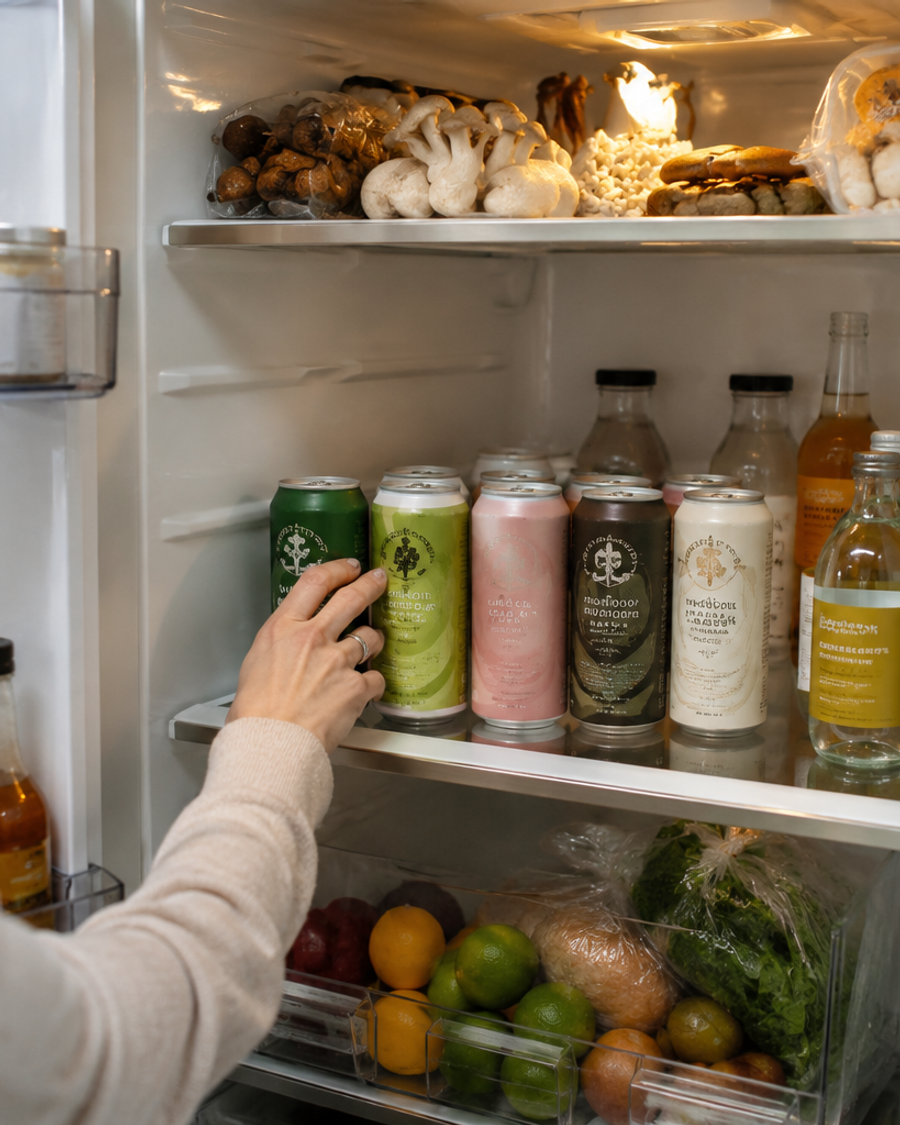
Functional beverages are drinks that promise more than basic hydration. They include functional ingredients like herbs, mushrooms, amino acids, CBD, adaptogens, or nootropics. Common examples include mushroom coffee, ashwagandha lattes, CBD sparkling water, and adaptogen sodas.
Most functional beverages are not regulated like medicines. They are sold as foods or dietary supplements, not drugs. This means they do not need FDA approval before entering the market. They are also not held to the same manufacturing standards as prescription medicines. This distinction is critical when evaluating the credibility of a product's health claims.
The 2018 Farm Bill removed hemp from the Controlled Substances Act. This change opened the market for CBD products. Additionally, the broader wellness trend and social media accelerated consumer demand.
This post looks at what’s in these drinks and checks if the claims are backed by evidence.
What The Research Actually Shows About Lion's Mane Mushroom Drinks
Lion's mane mushroom, or Hericium erinaceus, has been a part of traditional East Asian medicine for centuries. It grows in North America, Europe, and East Asia.
Lion's mane contains two unique families of bioactive compounds. Hericenones are found in the fruiting body. Erinacines are found in the mycelium, the root-like part of the fungus. Both can boost nerve growth factor. This protein helps nerve cells grow and stay healthy. This is why lion's mane is often marketed for brain health and cognitive support.
Lion's mane has beta-glucans that help the immune system. It also contains antioxidants like ergothioneine and natural amino acids, which add a rich, savory flavor.
What the human research shows:
A 2025 review looked at five randomized trials and 21 other studies on lion's mane. It found benefits for neuroprotection, cognitive support, gut health, and reduced anxiety. The authors pointed out that most evidence comes from lab and animal studies. Human trials are small and show mixed results.
The dose is critical.
The Mori et al. clinical trial is a key study on lion's mane. It used 3,000 mg of 96% dry powder daily in tablet form. Preclinical studies showing neuroprotective effects used standardized mycelial extracts at specific concentrations. A 2026 review found that lion's mane has strong bioactive compounds, like hericenones, erinacines, beta-glucans, and ergothioneine. However, most evidence comes from in vitro and animal studies. Lion's mane's benefits in commercial food products are not yet proven.
Many functional drinks include lion's mane in a blend. However, they often don't say how much is used, how it’s standardized, or if they use the fruiting body or mycelium. Specifically, hericenones are in the fruiting body, while erinacines are in the mycelium. They have different bioactive profiles, which may lead to different effects. Clinical trial formulations and canned beverages differ. This difference can change the experience shown by the evidence.
What Ashwagandha Drinks Can and Cannot Do for Stress
Ashwagandha, also known as Withania somnifera, is a plant. It has been part of Ayurvedic medicine for thousands of years. Experts classify it as an adaptogen, a substance believed to help the body handle stress. The main bioactive compounds are withanolides. These steroidal lactones are responsible for most of the effects studied.
Ashwagandha mainly affects the hypothalamic-pituitary-adrenal axis. This is the body’s key stress-response system, and it controls cortisol release. A 2026 meta-analysis looked at 23 randomized controlled trials with 1,706 participants. It found a strong cortisol-lowering effect. The standardized mean difference was -1.18. This is one of the strongest evidence bases for any functional beverage ingredient on the market.
Ashwagandha exerts a measurable influence on hormone regulation. Studies suggest that it may cause a small increase in T4, one of the main thyroid hormones. It has also improved thyroid function in people with subclinical hypothyroidism. This is a mild form of underactive thyroid. Ashwagandha may also affect testosterone. Research showed that it raised testosterone levels in men by about 57 ng/dL. However, this boost was not observed in women.
These effects matter because ashwagandha is not a harmless “stress-relief” herb. People with thyroid problems, hormone issues, or those taking thyroid medicine should be careful. They should talk to their healthcare provider about its use. Research shows that ashwagandha might help lower stress, anxiety, and depression. This is especially true in the short term.
A 2026 review of 22 randomized controlled trials found that people who took ashwagandha reported lower stress. They also had less anxiety and fewer depressive symptoms compared to control groups. Individual studies have found similar results. In a study from 2026, people who took ashwagandha saw a 38%–42% drop in their Perceived Stress Scale (PSS) scores. This scale measures how stressed someone feels. This improvement was significantly greater than with placebo.
A different study found that people who took ashwagandha had an average Stress score of 13. In contrast, the placebo group had a score of 18.7.
These results are encouraging, but they do not mean ashwagandha is a proven treatment for an anxiety disorder or depression. Most studies were short-term and used specific, standardized ashwagandha extracts at known doses. A functional beverage containing a small or unknown amount of ashwagandha may not provide the same benefits.
Most studies found benefits with daily doses of 240 to 600 mg of standardized ashwagandha root extract. These doses were taken for eight to twelve weeks. Studies used extracts with specific amounts of withanolides, typically 2.5% to 5%. So, just because a drink label says "ashwagandha root," it doesn’t mean it has the same levels as in the research. If the label does not disclose the dose and standardization, the health claims may be stronger than the evidence behind the drink.
The Honest Clinical Picture on CBD Beverages
CBD, or cannabidiol, is a non-psychoactive compound from the hemp plant. It interacts with the endocannabinoid system. This system has receptors that regulate mood, sleep, appetite, and pain.
The only FDA-approved CBD product is Epidiolex. It’s a prescription medicine for rare seizure disorders. People taking Epidiolex receive 5 to 20 mg per kilogram of body weight daily. Most CBD beverages contain 10 to 25 mg per serving. The FDA has not approved CBD as a food additive or dietary supplement. This is because it was first authorized as a prescription drug. Also, there is not enough evidence to show it is safe for food use. Despite this, CBD beverages remain widely available due to inconsistent state-level enforcement.
Most CBD-infused drinks have only low concentrations of CBD. There is little evidence that these dosages offer real health benefits. CBD can have calming effects, but only at doses 10 to 30 times higher than what’s in commercial drinks. The gap between pharmaceutical doses and beverage doses is significant. A 20 mg CBD sparkling water likely won't help much with anxiety relief based on the evidence. Any calm felt at these doses is probably just placebo, a ritual effect, or hydration.
CBD is not risk-free. Liver enzyme levels rose in about 13 of every 100 people in clinical trials. The risk was highest when CBD was used with specific seizure medications. CBD affects liver enzymes that process many common medications. This includes sleep medicines, anti-anxiety drugs, antidepressants, opioid painkillers, and beta-blockers. Common side effects include sleepiness, stomach problems, diarrhea, decreased appetite, and fatigue.
Label accuracy is a big issue. Studies show that only around 31% of CBD products contain the amount of CBD listed on the label. About 20% also have hidden THC. This means a consumer might test positive on a drug test, even if the product says it's THC-free.
Which Other Adaptogen Ingredients Have Real Evidence Behind Them
L-theanine is an amino acid found in green tea. It has strong evidence supporting its benefits. A 2026 review looked at 31 randomized controlled trials with 1,168 participants. It found that a single 200 mg dose improved reaction time in attention tests. L-theanine works well with caffeine. It boosts alertness and focus without the jitters that caffeine can cause on its own. It has a good safety record with no serious side effects reported in human studies.
Studies using 340 to 680 mg of standardized Rhodiola rosea extract daily found it may reduce mental and physical fatigue. It can also improve thinking under stress and help some people with burnout symptoms. Generally well tolerated in clinical trials with no significant drug interactions reported.
Panax ginseng is one of the most widely studied adaptogens with a large body of research. It may help reduce fatigue and produce small improvements in memory in some people. Evidence is promising ,but results vary across studies.
Reishi mushroom has polysaccharides and triterpenoids. Lab studies show these compounds boost the immune system. Strong human evidence for most reishi beverage claims is limited.
Clinical trials used standardized extracts at specific doses and times. However, a small amount of rhodiola or ginseng in a beverage's wellness blend, without clear dosing, is different. Dosage matters for every ingredient in this category.
Do Functional Drinks Actually Hydrate You?
A drink should do one basic job,keep you hydrated. Whether functional beverages do this well depends on their ingredients.
Research with the Beverage Hydration Index shows how well the body keeps fluid from drinks. It found that plain water, tea, coffee, sparkling water, and sports drinks all hydrate similarly. Skim milk had the highest fluid retention of any commonly tested beverage. Sodium content and calories were the two factors most associated with better fluid retention in the body.
Some functional drink ingredients can actually work against hydration. Large amounts of caffeine may increase urine output. CBD can cause diarrhea,which depletes both fluid and electrolytes. Low-calorie sugar alcohols can pull water into the intestines and cause fluid loss in some people. Certain herbal extracts may also have mild diuretic effects.
A functional beverage does not guarantee superior hydration compared to other drinks. For everyday needs, plain water works well. However, fluid retention becomes more important after exercise, in extreme heat, or during illness. In these cases, it's best to drink beverages that contain sodium. Sodium improves hydration more effectively than trendy adaptogens do.
Who Should Be Extra Careful
GLP-1 medication users: GLP-1 medicines can lower fluid intake. They also affect hormones that control water balance. Combined with nausea, vomiting, and diarrhea, the risk of dehydration increases. Choose drinks that are easy on your stomach. Avoid those with high caffeine, sugar alcohols, or strong herbal extracts. These can make GI symptoms worse.
Perimenopausal women: Estrogen helps regulate thirst and how the body handles water. As estrogen fluctuates during perimenopause, hydration signals and fluid balance change. Regular fluid intake becomes especially important. Be careful with ashwagandha when choosing functional drinks. Beyond herbs, some functional beverages contain phytoestrogens like soy or red clover. The evidence on using these ingredients for perimenopause symptoms is mixed. Medical organizations usually do not recommend these supplements as a main treatment.
People on prescription medications should be aware. CBD has the highest drug interaction profile of any common ingredient in functional beverages. Ashwagandha interacts with thyroid medicines, sedatives, blood pressure medicines, immunosuppressants, and diabetes medicines. Check with your doctor before adding functional drinks to your routine, especially if you're on prescription meds.
People with mushroom allergies should avoid Lion's Mane. For people taking blood thinners, some mushroom compounds may affect clotting. People with weak immune systems or those on immunosuppressant drugs should avoid it. Pregnant or breastfeeding women should avoid it. There isn’t enough research to confirm it's safe.
How to Read a Functional Beverage Label Like a Physician
Step 1: Find the dose. Look for the exact milligrams of each active ingredient per serving. If you cannot see the dose, you cannot test the claim. The Mori et al. lion's mane trial used 3,000 mg of 96% dry powder daily. The ashwagandha trials that showed reduced cortisol used 240 to 600 mg of the standardized extract. If a beverage does not disclose its dose, you have no way to compare it to what the research actually studied.
Step 2: Look for standardized extracts. Ashwagandha studies typically use extracts standardized to 2.5 to 5% withanolides. Lion's Mane studies specify fruiting body versus mycelium. Listing the ingredient name alone does not prove the product matches the research.
Step 3 :Check for ingredients that may work against hydration. Cut back on caffeine. Limit sugar alcohols like sorbitol and erythritol. Avoid large amounts of herbal extracts.
Step 4: Be wary of big claims. Some food and beverage companies claim their products treat, cure, or prevent diseases. Also, words like "clinically proven" and "doctor recommended" are often marketing tactics. "Balances hormones" is another common phrase used to imply health benefits.
Step 5: Look for independent testing. NSF, USP, and ConsumerLab certifications confirm that a product has the ingredients shown on the label.
Step 6: Add up your total daily intake. Mushroom coffee in the morning. An adaptogen drink in the afternoon. CBD water at night. Together, they may give you more caffeine, herbs, and active compounds than you expect. Consider your total daily intake across all products, including supplements, foods, and medications.
Step 7: Check sodium if hydration is the goal. Drinks with less than 10 mmol/L of sodium likely won't help you keep fluids. They’re no better than plain water, no matter how many functional ingredients they have.
The Bottom Line
First, the evidence is real for some ingredients but the dose in the beverage usually is not.
Second, CBD beverages carry more risk than most labels suggest. Label inaccuracy is well documented.
Third, A functional beverage is not the same as a hydration drink.
If you like functional drinks, they can help you meet your daily fluid goals. That’s a real and valuable benefit. But when you buy one, read the label like a physician. Find the dose. Look for standardized extracts. Watch for stomach-disrupting ingredients. Match the claim to the evidence before you trust the price tag.
Did this change how you will view the functional beverage aisle? Tell me in the comments. I read every one. Share this with someone who spends significant money on these drinks every week.
Subscribe to Hydration Bar MD for weekly tips on hydration and wellness. You’ll get expert advice written by physicians, arriving every Monday morning.
Medical Disclaimer: The content on Hydration Bar MD is for educational purposes only and does not constitute medical advice. Always consult your physician before adding any functional ingredient to your routine , especially if you take prescription medications, have thyroid disease, an autoimmune condition, or any other health condition.