You finally get into bed after a long day. Then your mouth feels dry, or you wake up tired. Could dehydration be part of the reason?
Drinking enough water supports normal body function. But drinking extra water is not a proven treatment for poor sleep.
In this post we will cover:
- What the research actually shows about dehydration and sleep
- Three ways hydration and sleep may affect each other
- Whether a glass of water before bed helps or hurts
- What to do if you wake up thirsty
- Whether you need a water cutoff time at night
- When poor sleep needs a closer look
Can Dehydration Actually Affect Your Sleep?
It is possible that hydration plays a role in sleep, but the direct evidence is still limited. The two main studies that tested this were small. Both found that mild dehydration did not clearly change how long or how well people slept. More research is needed before anyone can say for sure.
Dehydration happens when your body loses more fluid than it takes in. The effects depend on how much fluid you lose, how fast, your activity, your surroundings, and your health.
More serious dehydration can cause thirst, dry mouth, headache, tiredness, and dizziness. These may make it harder to settle down. But they do not automatically mean dehydration is causing a sleep problem.
What the Sleep Studies Actually Found
A 2019 study tested 12 healthy young men during two nights of lab sleep testing [1]. One night came after 24 hours of limited fluid, about 1.25 liters. The other came after 24 hours of enough fluid, at least 3 liters.
Urine tests confirmed hydration status. Sleep was measured with polysomnography, a detailed way of measuring sleep in a lab. The researchers found no significant differences in overall sleep quality or amount of sleep [1].
A later review described the same study as showing less REM sleep, the dreaming stage of sleep [2]. Total sleep time still did not change. Even descriptions of this one small study differ. That shows how unsettled this research still is.
A 2025 study looked at eight young men who did regular strength training [3]. It compared nights spent dehydrated with nights spent well hydrated, before and after a hard leg workout. Sleep was tracked with a wearable device.
Blood and urine tests confirmed the men were dehydrated. Even so, the study found no differences in total sleep, sleep efficiency, deep sleep, REM sleep, or time awake [3]. Sleep efficiency means how much of your time in bed you actually spend asleep.
These studies tested hydration and sleep directly. But they were small, included only young men, and looked at short periods of mild dehydration.
How Do Hydration and Sleep Affect Each Other?
Hydration and sleep may affect each other in three main ways. Thirst and dry mouth can make you uncomfortable. Feeling unwell from fluid loss can make rest harder. And drinking a lot late at night can lead to bathroom trips. These pathways are not equally well studied.
Thirst and Dry Mouth Can Keep You Uncomfortable
If you go to bed thirsty, it may be harder to settle in. A dry mouth can also distract you if you wake at night.
Thirst is a useful signal, but it is not a complete measure of your hydration. Dry mouth can also come from certain medicines, mouth breathing, snoring, and some medical conditions. In one large national survey, people who snored were more likely to report frequent thirst [4].
Feeling Unwell Can Make Rest Harder
Fluid loss can add to headache, dizziness, and tiredness. But feeling tired is not the same as feeling sleepy. Tiredness can also come from poor sleep, stress, illness, medicines, and other health conditions.
The link may also run the other way. A study of more than 26,000 adults in the United States and China looked at this [5]. Adults who slept 6 hours were more likely than 8-hour sleepers to show low hydration on urine tests.
A 2026 national survey found something similar. People who slept 6 hours or less were more likely to report frequent thirst [4].
One possible reason involves vasopressin, a hormone that helps your body hold on to water. Your body releases more of it later in the night. So cutting sleep short may reduce this effect [4].
These studies show a link at one point in time. They cannot prove that short sleep causes dehydration. It is also too early to say that mild dehydration directly causes insomnia, or ongoing trouble sleeping.
Late-Night Drinking Can Lead to Bathroom Trips
Nocturia means waking up from sleep to urinate. If you drink a large amount shortly before bed, you may need to get up during the night.
A review found that fluid intake and other diet factors may add to nighttime urinary symptoms [6]. But the evidence for several of these links was limited.
A 2025 clinical review explains that nocturia can have many causes [7]. These include:
- Making too much urine at night
- Bladder symptoms or trouble emptying the bladder
- Medicine side effects
- Sleep disorders
- Conditions such as diabetes, heart failure, and untreated sleep apnea
So the answer is not to stop drinking water. It is to think about timing, your total fluid intake, and what may be waking you up.

Does Drinking Water Before Bed Help You Sleep?
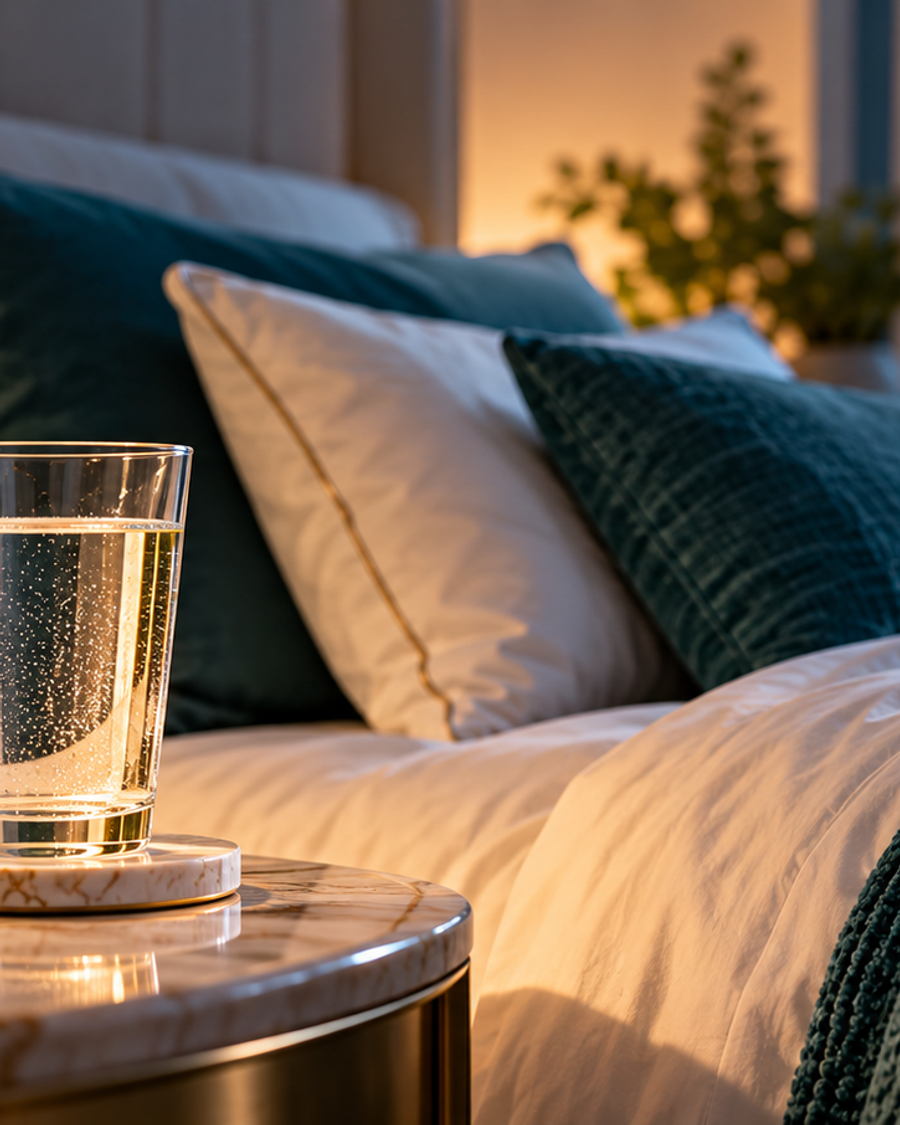
If you are thirsty, drinking some water can help relieve that thirst. But there is not strong evidence that a large glass of water right before bed improves sleep in healthy adults. It may also mean more trips to the bathroom during the night.
One small 2025 study looked at middle-aged Japanese men [8]. Drinking water before bed reduced morning thirst and was linked to better morning mood. But it also increased nighttime bathroom trips.
One small study is not enough to support advice for everyone. The trade-off matters, especially for older adults. Getting up in the dark raises their risk of falls.
Your body keeps balancing its fluids while you sleep. You do not need to drink extra to cover the whole night.
What Should You Do If You Wake Up Thirsty?
If you wake up thirsty, a few sips of water may be enough to make you comfortable. You do not need to force yourself to finish a large glass. Start by noticing whether this happens once in a while or almost every night.
Get a medical check if nighttime thirst is ongoing, unusually strong, or comes with any of these:
- Frequent urination
- Heavy thirst during the day
- Weight changes you cannot explain
- Loud snoring
- Other symptoms that worry you
These symptoms can have causes beyond everyday hydration habits.
Should You Stop Drinking Water After a Certain Time?
There is no single cutoff time that works for everyone. Your needs depend on your activity, climate, medicines, health conditions, and how much you have already had to drink. If you exercise in the evening or spend time in the heat, you may need fluids later in the day.
If bathroom trips often break up your sleep, drink more of your fluids earlier in the day. Avoid large drinks in the last few hours before bed. Limiting evening fluids is a common first step for bothersome nocturia [7].
Keep water nearby in case you get thirsty. The goal is fewer sleep interruptions, not going to bed dehydrated. Do not cut back so much that you become thirsty or underhydrated, especially in hot weather.
If you have a health condition that affects fluid balance, follow your clinician’s fluid instructions. Their advice comes before general bedtime rules.
For help building a routine that fits your day, read The Morning Hydration Ritual That Actually Works.
How Do You Stay Hydrated Without Disrupting Sleep?
Spread your drinks across the day instead of catching up at night. Let thirst help guide you, but do not rely on it alone. Watch caffeine and alcohol in the evening, too. You do not need a complicated nighttime ritual to stay well hydrated.
Make Hydration a Daytime Habit
Have water with meals. Keep a bottle nearby if that helps. Take drink breaks during work or other activities.
Your needs are personal. They can change with body size, activity, temperature, pregnancy, illness, and some medicines. Our guide to building a personalized hydration plan explains why one daily target does not fit everyone.
Pay Attention to Thirst
Thirst can help guide when to drink, but it is not perfect. Some older adults and people with certain medical conditions may not feel thirst the same way.
So also think about your usual drinking pattern, your activity, and the weather. If you have been sweating heavily, exercising, or out in the heat, focus on replacing lost fluids.
Watch Caffeine and Alcohol in the Evening
Caffeine can interfere with sleep, especially later in the day or if you are sensitive to it. Alcohol may make you sleepy at first but can disrupt sleep later in the night. Limiting both in the evening is also standard first advice for nighttime urination [7].

What If Better Hydration Does Not Fix Your Sleep?
Hydration is one piece of your routine, not a complete sleep plan. If you struggle to fall asleep, wake often, or still feel unrested, look at other causes. These include stress, irregular sleep schedules, caffeine, alcohol, pain, medicines, sleep apnea, or other health conditions.
Nighttime urination can also be linked to more than how much you drink. A systematic review found that sleep conditions can help explain why people wake to urinate [9]. The strength of the evidence varied by condition.
Obstructive sleep apnea is one example. It can increase how much urine your body makes at night. Treating it can reduce nighttime bathroom trips in some people, but results vary [10].
Seek medical advice if sleep problems last, affect daily life, or come with any of these:
- Loud snoring with gasping
- Strong daytime sleepiness
- Ongoing heavy thirst
- Frequent urination
The Bottom Line
The link between hydration and sleep is more nuanced than social media suggests. Small studies have not shown that mild dehydration reliably worsens sleep. Drink steadily during the day, respond to thirst, and move large drinks earlier if bathroom trips wake you. If poor sleep continues, look deeper. You do not need extra water before bed to earn a good night’s sleep.